

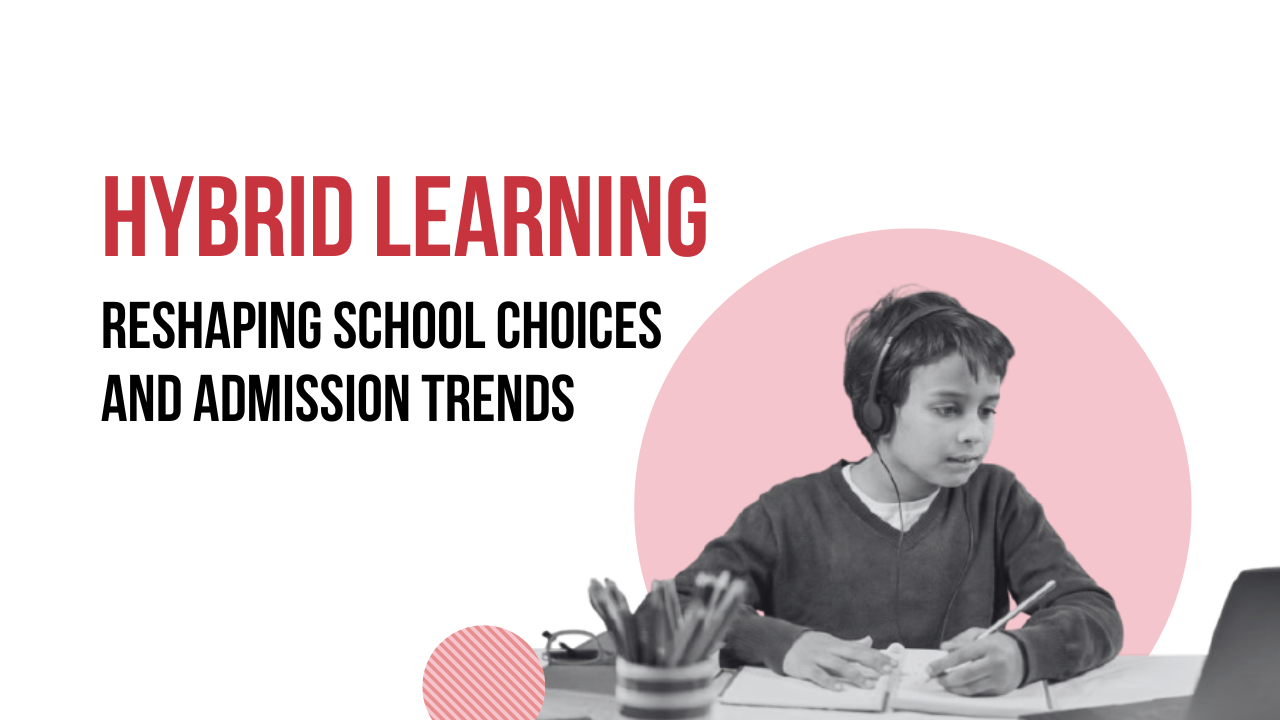
A few missed school days can create more stress than expected. Whether it is travel, illness, or sports, students come back carrying borrowed notebooks. The lessons inside are often difficult to piece together. Parents fill the gaps at home, turning evenings into extra school hours.
In 2026, school admission goes beyond buildings and brochures. It is about how a school maintains learning continuity beyond the classroom, and how technology shifts from feeling complex to making life easier for parents. This is where the concept of hybrid learning steps in.
The proven solution: LMS
When schools talk about keeping learning continuous, the most practical answer today is an LMS, short for Learning Management System. In simple terms, it is a secure online space where teachers upload lessons, notes, assignments, and resources for students to access anytime.
Instead of learning to live only inside a classroom, it becomes available wherever the student is. Part of the learning happens on campus, and part continues at home, during travel, or after school hours.
It removes the idea that missing a day means missing the lesson. Learning stays organised, accessible, and connected beyond the school gates.
How it works in the real-world?
When students return after a few days, they do not start from zero. They log into the school’s LMS and find recorded lessons, shared notes, worksheets, and updates waiting for them. They can revisit topics, pause, replay, and study at their own pace before stepping back into class.
This is hybrid learning in action. Classroom teaching continues, while the LMS quietly supports it in the background. Instead of scrambling borrowed notebooks, students reconnect with the same material their classmates saw, ensuring no lecture is truly missed
Now this leads to a question.
How this makes life easier for parents?
Hybrid Learning solves a lot of problems for parents. They no longer need to decode rushed explanations from borrowed notes or step in with last minute tutoring before tests. Their child already has access to what was taught, how it was taught, and when it is needed.
Hybrid learning allows children to revise independently, catch up quietly, and return to school feeling prepared rather than anxious. It also builds trust. Parents gain visibility into what their child is learning, without having to chase teachers or recreate lessons themselves. The pressure to become a substitute teacher fade.
This shift is exactly what modern families look for during school admission. Parents prefer schools that protect learning time, even when schedules change or days are missed.
Looking ahead to school admission in 2026
As parent expectations continue to evolve, schools are no longer evaluated only on curriculum or campus experience. They are judged on how well their systems support student well-being, continuity, and balance.
A flexible, digitally robust ecosystem has become a competitive advantage. Schools that combine classrooms with dependable hybrid learning models are better prepared to meet both academic and emotional needs of students in a connected world.
For school directors planning the 2026 session, this is a moment to look inward.
Auditing networks, LMS access, device readiness, and digital workflows helps ensure that learning does not pause. Behind every seamless hybrid classroom is an infrastructure that works quietly in the background.
Netoyed for Education supports schools in identifying gaps in their infrastructure, aligning security policies, securing connectivity and creating a robust and dependable learning environment for students to ensure uninterrupted learning.


 1st Floor, H-31, Sector 63,
 +91 7898375456