
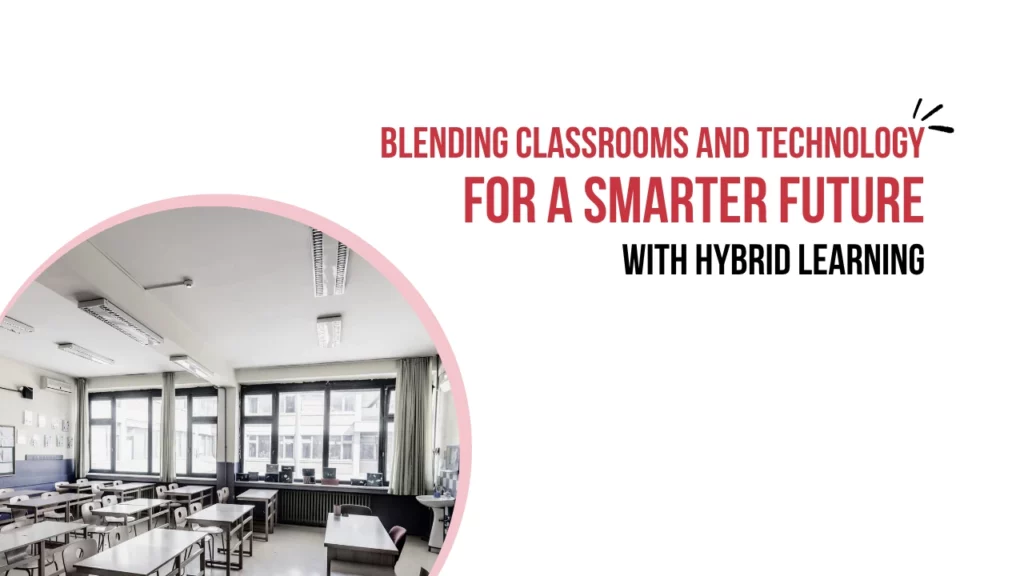
The education system is currently navigating a landscape where physical presence can no longer be the only guarantee for learning. Physical barriers are increasingly disrupting the traditional academic calendar, making it difficult for schools to maintain consistency.
The rise in extreme heatwaves across India is forcing schools to cancel classes or suddenly shift schedules. The lasting lessons from the COVID-19 pandemic remind us how quickly physical access to buildings can be cut off.
These disruptions highlight the urgent need for a more resilient model that ensures education continues regardless of environmental or external challenges.
What is a hybrid learning model?
Hybrid learning brings together the best of two worlds. It combines the direct, human interaction of a physical classroom with the adaptability of digital resources.
This is not about simply moving lessons onto a screen. Instead, it is a deliberate integration where the classroom serves as a hub for collaborative activities, while digital platforms provide the space for self-paced study and content exploration.
By splitting the learning journey into these two distinct but connected spaces, schools can offer a more reliable path for every student. The Hurdle proof model provides the consistency of a school routine while embracing the freedom offered by modern technology.
The technological toolkit for hybrid learning
A successful implementation of Hybrid learning requires a specific set of tools that work together seamlessly.
- Learning Management Systems (LMS): These act as the central nervous system, housing all content, assignments, and grades in one accessible location
- Video conferencing tools: These provide the bridge for live, synchronous sessions, allowing for face-to-face connection even when students cannot reach the school building
- Cloud collaboration platforms: These allow students to work on projects together in real time, mirroring the collaborative nature of modern professional environments
- Analytical software: These tools can provide teachers with real-time data on student progress, helping to identify where extra support is needed
These tools are the foundation upon which hybrid learning for schools is built, ensuring the system remains efficient and responsive to student needs.
Hybrid learning with google tools
Many leading schools use google for education tools for implementing hybrid learning. It acts as the central nervous system of the hybrid classroom, housing all content, assignments, and grades in one accessible location, while simultaneously integrating with the wider Google ecosystem.
Google Meet provides the bridge for live, synchronous sessions, allowing for face-to-face connection even when students cannot reach the school building and crucially, it connects directly within the learning environment itself, removing unnecessary friction for both educators and students. For collaboration, Google Workspace tools such as Docs, Slides, and Sheets allow students to work on projects together in real time, mirroring the collaborative nature of modern professional environments.
Finally, the built-in Classroom Analytics provide teachers with real-time data on student progress, helping to identify where extra support is needed. These tools do not simply exist alongside one another, they are designed to work together seamlessly, ensuring that the system remains efficient and responsive to student needs, and allowing educators to direct their full attention toward teaching rather than navigating disconnected platforms.
Advantages of hybrid learning for schools
The primary benefit of hybrid learning is the level of flexibility it introduces.
Students can revisit complex lessons at their own speed, ensuring they grasp foundational concepts before moving forward.
- Improved Retention: The impact of this model is backed by research showing that digitally integrated learning can increase retention rates to 25%–60%. These figures stand in sharp contrast to the significantly lower rates observed in conventional classroom environments.
- Workload Management: For teachers, hybrid learning allows for a better distribution of workload. Digital platforms can automate routine administrative tasks, such as marking or attendance, freeing up valuable time for direct mentorship and individual support.
- Skill Acquisition: This shift helps students develop essential self-discipline and digital literacy, preparing them for a future where these competencies are standard.
Practical hurdles of hybrid learning
Transitioning to a new model naturally raises concerns that must be addressed to ensure success.
- The digital divide: Not every student has access to the same quality of devices or stable internet at home, which can lead to disparities in engagement. Schools must be proactive in providing resources or finding ways to ensure that all students can participate regardless of their home environment.
- Teacher training: Managing a classroom that operates in both physical and virtual spaces require a specific set of skills. Without proper support and professional development, the transition can feel demanding for educators.
- Maintaining discipline: Ensuring student accountability in a digital space requires clear expectations and robust tracking. This is an essential component when implementing hybrid learning for schools.
The integrated future of Hybrid Learning
We are moving toward a point where hybrid learning for schools will leverage virtual reality to provide immersive, risk-free simulations for subjects like science or history.
- AI Integration: Artificial intelligence will soon help in delivering more personalised content delivery based on progress data
- Global Classrooms: Global collaboration will become a standard practice, with students from different regions working on the same projects through shared digital platforms
- Blockchain Credentials: We may also see the rise of blockchain for secure, digital certifications earned through these hybrid programmes
These trends are not just about adding more technology; they are about making the entire educational experience more inclusive and aligned with the demands of the modern world.
A new era for education
The transition toward hybrid learning for schools is a fundamental shift in how we think about the continuity of education. By integrating the best elements of traditional teaching with the flexibility of digital tools, we are building a system that is far more resilient and capable of adapting to unexpected climate conditions, public health emergencies, or other unforeseen challenges.
Hurdle-proof model relies on a commitment to supporting the people involved and ensuring that technology serves as a bridge for deeper engagement. Embracing this future means choosing a path where tools enhance human connection in the classroom, ensuring that the process of discovery never has to stop.
Learning has no walls. Whether in a classroom or across a screen, the curious mind finds its way.


 1st Floor, H-31, Sector 63,
 +91 7898375456